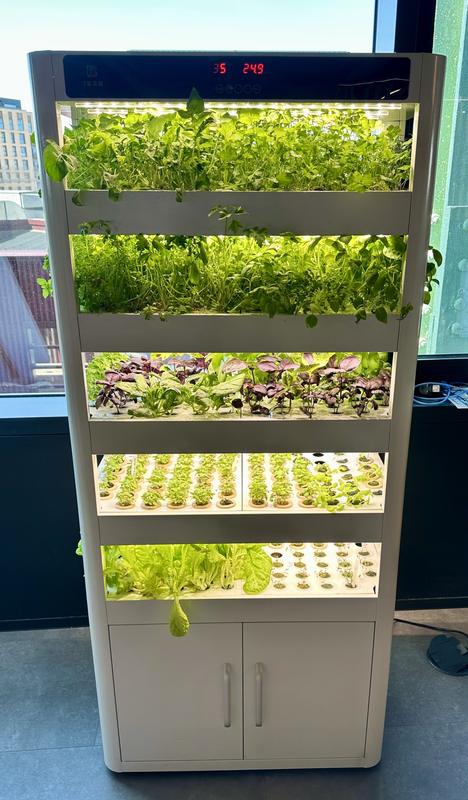
Herbs, leaves and garnish growing in the venue, picked minutes before they reach a plate or a glass. Guests notice it immediately, and so does everyone working behind the pass.
The opportunity
The shortest supply chain in the building.
Hospitality has spent years telling provenance stories on menus. The producer, the county, the number of miles. This shortens that story to the length of a room.
Herbs are the obvious starting point. They are the most perishable thing a kitchen buys, the most wasteful, and the thing most likely to be sitting limp in a fridge when it is needed. Growing them on site means cutting exactly what is wanted, on the day it is wanted.
Then there is the part guests see. A living tower in a bar or a dining room is a genuine talking point and it photographs beautifully, which does a quiet amount of marketing work on its own.
The Harvestory insight
Front of house and back of house, at once.
Most things a venue invests in serve one side of the operation. This serves both. The kitchen gets fresher product and less waste. The room gets something alive that guests ask about. The team gets something to be a bit proud of.
Why it earns its place
More than a growing system.
Freshness on the plate
Cut and come again herbs and leaves picked at the point of service. No cold chain, no wilting, no ordering ahead and hoping the covers land.
Waste and ordering
Herbs are bought in bunches and thrown away in bunches. Growing to demand takes a persistent, irritating line of waste out of the kitchen.
A genuine talking point
Guests notice it before they have opened a menu. It starts the conversation about where the food comes from without the venue having to make the claim.
Menu and seasonality
Chefs can grow to a dish rather than a dish to a supplier list. Unusual leaves and varieties that are hard to buy well become easy to have.
Team engagement
Kitchen and floor teams take to it quickly. It is a rare thing in hospitality that is both practical and enjoyable to look after.
Events and activation
Tastings, garnish sessions and drinks events built around what has just been cut. Ready made content, and a reason for guests to come back.
In your space
Small things, done properly.
Garnish is the detail people remember and the detail most often let down by the supply chain. A leaf cut ten minutes ago behaves differently on a plate and in a glass to one that travelled for three days.
Start with what the kitchen already uses most, then widen into the varieties that are hard to source well. That is usually where it starts earning its place.
Every installation is designed around the space, the people who will use it and the story worth telling there. Start with one, then expand what works.
Indoor · Cabinet
GrowStation
A cabinet system with real visual weight and a clear growing structure. Herbs, salads and edible leaves at eye level. It suits canteens, offices, receptions and classrooms, and works well as a first installation.
Indoor · Everyday herbs
Herb Station
An assortment of culinary herbs for everyday use, grown together in one cabinet. Basil, coriander, mint, parsley and chives, cut and come again, so you take what you need and the plant keeps producing. The most practical starting point for a kitchen or a communal space.
Immersive · Flagship
Living Wall
A larger, immersive feature for arrival spaces, dining rooms and flagship sites. High visual presence and a strong signal about how a place thinks about food.
Indoor or outdoor
Totem
A vertical growing tower with a small footprint and a big presence. Good on terraces, in lounges and at events, and striking when several are grouped into an indoor market garden.
Seed to stomach
On site nursery
A propagation area so a site can grow from seed and see the whole journey. This is where the story becomes complete, and where deeper engagement and long term ownership come from.
Bringing it to life
An installation is the excuse. The gathering is the point.
These sessions are drawn from workshops we have already run. Pick one to launch with, or rotate them through the seasons. Every one is built to teach, connect and celebrate.
Smoothie Sensation
Greens and herbs cut on site and blended fresh. A natural fit for wellbeing weeks, sports teams and recovery.
Drinks Discovery
An evening drinks session where the garnish and the herbs lift something simple into something memorable.
Tea Workshop
Herbal teas brewed from leaves cut that morning, paired with mint madeleines. The calmest of the five.
Pesto and Pizza Party
Pesto made together from basil cut minutes earlier. Easy, popular, and usually the one people ask to repeat.
Root Ritual
Germination and propagation, hands in the growing medium. A grounding introduction to growing from seed.
Common questions
The things people ask first.
Why grow herbs in a restaurant or bar?
Because herbs are the most perishable thing a kitchen buys and the most commonly wasted. Growing them on site means cutting exactly what is needed on the day it is needed, with no cold chain and no ordering ahead. Guests also see it, which starts the provenance conversation without the venue having to make a claim.
What can a kitchen actually grow?
Herbs, salad leaves, microgreens and edible flowers. Basil, coriander, mint, chives, dill, rocket, mustard, pea shoots and unusual varieties that are difficult to buy in good condition. Crops are cut and come again, so the plant keeps producing after each harvest.
Is it food safe for a commercial kitchen?
Yes, and it is documented. Harvestory maintains written food safety, allergen, water management, cleaning and pest management procedures with record sheets, so the installation sits inside an existing food safety management system rather than alongside it.
How much work is it for the brigade?
A few minutes a day and a slightly longer weekly task. Kitchen teams pick it up quickly because it is a familiar kind of routine. Harvestory visits regularly to replant and keep the rotation moving.
Can it go front of house?
Yes. A tower in a dining room or bar is a genuine talking point and photographs well. Where a venue wants the growing visible and the harvesting discreet, the two can be split across separate installations.
Get in touch
Let's start with the bar, or the pass.
Tell us about the venue, the covers and what the kitchen is buying in that never quite arrives in the state it should. We will suggest where to put a first installation.