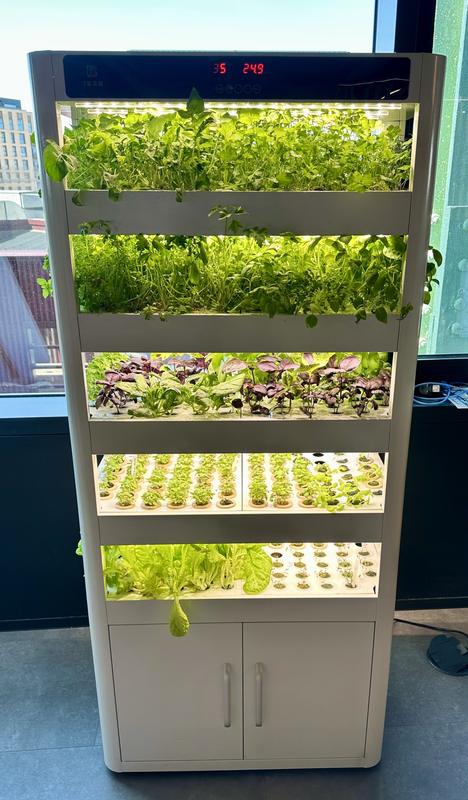
Something green, calm and alive, in buildings that need it most.
Healthcare settings are demanding places to work in and difficult places to be in. A growing installation puts something living, tended and quietly hopeful into spaces that rarely have any.
The opportunity
For the people who work there, and the people who are there.
Staff wellbeing in health and care is not a soft subject. Retention is the problem almost every trust, group and provider is trying to solve, and the break room is where a lot of that is won or lost. A staff restaurant or a rest space with something growing in it is a different kind of room to one with a vending machine in it.
For patients, residents and the people visiting them, the value is different again. Tending something is one of the oldest and best understood forms of therapeutic activity. It gives people a reason to move, something to look after, something to notice changing, and something to talk about that has nothing to do with why they are there.
And in hospices and care settings there is the simplest version of all. Taste. Real herbs, cut that morning, in food that too often has none.
The Harvestory insight
Care is tending. So is growing.
The link is not decorative. Looking after a living thing, watching it respond, and harvesting something you can share is exactly the kind of small, repeatable, purposeful activity that these settings work hard to create. Here the activity comes with lunch attached.
Why it earns its place
More than a growing system.
Staff wellbeing and retention
Break spaces and staff restaurants that people actually want to sit in. A living, tended installation changes the character of a rest space in a way that furniture does not.
Therapeutic engagement
Sowing, tending and harvesting give patients and residents a structured, gentle activity with a visible result, and a reason to be up and moving.
Nutrition and taste
Fresh herbs and leaves on site, cut the same day. A meaningful lift for catering in settings where appetite and enjoyment of food are part of the clinical picture.
Family and visitor experience
Something alive and unhurried in a building that is neither. Visitors notice it, and children visiting a relative have something to look at and ask about.
Community and volunteering
A natural home for volunteers, leagues of friends and community groups, with a clear task and a visible result to show for it.
Sustainability commitments
Zero distance production and visible resource awareness that contributes to a trust or group's green plan, with participation and harvest data behind it.
In your space
Designed around real constraints.
Healthcare is the most constrained environment we work in and we would rather talk about that early than pretend otherwise. Infection prevention and control, cleaning regimes, water management, siting, access and who is permitted to handle what all shape which system goes where.
Our food safety, water management, cleaning and pest management procedures are written down, and we will work through them with your IPC and estates teams before anything is installed rather than after.
Every installation is designed around the space, the people who will use it and the story worth telling there. Start with one, then expand what works.
Indoor · Cabinet
GrowStation
A cabinet system with real visual weight and a clear growing structure. Herbs, salads and edible leaves at eye level. It suits canteens, offices, receptions and classrooms, and works well as a first installation.
Indoor · Everyday herbs
Herb Station
An assortment of culinary herbs for everyday use, grown together in one cabinet. Basil, coriander, mint, parsley and chives, cut and come again, so you take what you need and the plant keeps producing. The most practical starting point for a kitchen or a communal space.
Immersive · Flagship
Living Wall
A larger, immersive feature for arrival spaces, dining rooms and flagship sites. High visual presence and a strong signal about how a place thinks about food.
Indoor or outdoor
Totem
A vertical growing tower with a small footprint and a big presence. Good on terraces, in lounges and at events, and striking when several are grouped into an indoor market garden.
Seed to stomach
On site nursery
A propagation area so a site can grow from seed and see the whole journey. This is where the story becomes complete, and where deeper engagement and long term ownership come from.
Bringing it to life
An installation is the excuse. The gathering is the point.
These sessions are drawn from workshops we have already run. Pick one to launch with, or rotate them through the seasons. Every one is built to teach, connect and celebrate.
Smoothie Sensation
Greens and herbs cut on site and blended fresh. A natural fit for wellbeing weeks, sports teams and recovery.
Drinks Discovery
An evening drinks session where the garnish and the herbs lift something simple into something memorable.
Tea Workshop
Herbal teas brewed from leaves cut that morning, paired with mint madeleines. The calmest of the five.
Pesto and Pizza Party
Pesto made together from basil cut minutes earlier. Easy, popular, and usually the one people ask to repeat.
Root Ritual
Germination and propagation, hands in the growing medium. A grounding introduction to growing from seed.
Common questions
The things people ask first.
Why put a growing installation in a healthcare setting?
For three reasons that usually apply at once. It changes the character of a staff rest space, which matters for retention. It gives patients and residents a gentle, repeatable activity with a visible result. And it puts fresh herbs into catering in settings where enjoyment of food is part of the clinical picture.
How does it work with infection prevention and control?
It is discussed before anything is installed, not after. Siting, cleaning regimes, water management, access and who is permitted to handle what all shape which system goes where. Harvestory's written food safety, water management, cleaning and pest management procedures are shared with infection control and estates teams during planning.
Is it suitable for patients and residents to use?
Where the setting allows it, yes. Sowing, watering and harvesting are gentle, sensory tasks with no wrong answers, which is why therapeutic horticulture is already well established in care. The level of involvement is agreed with the clinical team rather than assumed.
Who maintains it?
That is agreed at the start and varies by setting. Some sites want Harvestory in regularly and their own teams doing very little. Others want staff, volunteers or a league of friends running it with Harvestory behind them. Both work, and the documentation is the same either way.
Does it help with a trust or group green plan?
It contributes. Food grown and eaten in the same building has no transport footprint, and the programme produces participation and harvest figures that can be reported rather than estimated.
Get in touch
Let's start where the staff go.
Tell us about the setting, whether the priority is staff, patients, residents or all three, and who would need to sign it off. We will be straight with you about what is workable.