Most of the world’s population now lives in cities, and this is still rising. Food demand is increasingly concentrated in urban spaces, while food production remains distant, hidden, and often misunderstood. Long supply chains, heavy processing, and limited food literacy have left many people disconnected from what they eat and how it is produced.
Seed to Stomach is a simple response to this challenge. By growing food where people live and work, we shorten the journey from growing to eating. We turn food from something delivered to us into something we participate in.
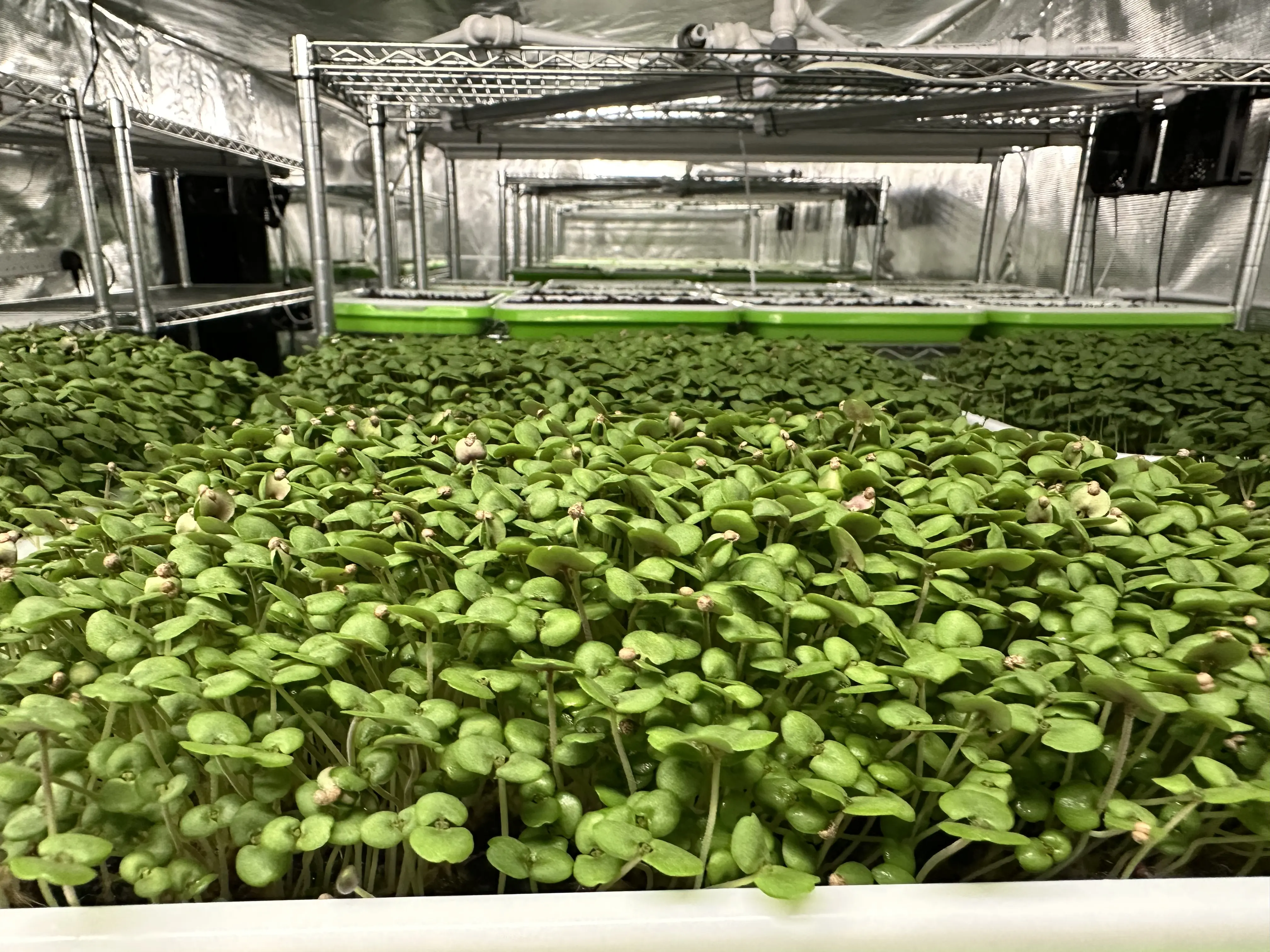
The Workplace Farm Hub is a practical example of this idea. Fresh herbs and leafy greens are grown on site. No food miles. No pesticides or herbicides. Significantly less water than conventional agriculture. Harvest to lunch within minutes.
This approach does more than produce food. It builds understanding of where food comes from, the effort required to grow it, and the impact our food choices have on health and the environment. When people reconnect with growing, they naturally make more informed and healthier choices.
Modern societies face rising diet related illness and declining wellbeing. Food is one of the most powerful daily inputs into our bodies. Treating food with care and respect is a step toward preventative health rather than reactive treatment. The saying remains true. You are what you eat.
What is Vertical Farming?
Vertical farming grows plants in stacked or upright systems, maximising yield in minimal space. This makes it ideal for urban environments where land is limited. The principle is simple. Increase growing surface area rather than expanding land footprint. While modern vertical farms use advanced technology, the idea itself is ancient. From early hanging gardens to wartime indoor crop production, humans have long adapted growing methods when space or soil was limited. Today, vertical farming is used in cities, remote environments, and even space research facilities.
What is Hydroponics?
Hydroponics is one form of vertical farming. Plants grow without soil, with their roots receiving water and nutrients directly. A growing medium holds the plant in place, and specialised lighting replaces sunlight. This creates a controlled environment where crops can grow all year round, independent of seasons or climate. Because nutrients, water, and light are precisely managed, plants grow faster, healthier, and with significantly less resource use. This method removes the need for pesticides, reduces water consumption dramatically, and allows fresh food to be grown in almost any environment.
Why it matters here?
By placing a hydroponic vertical farm inside the workplace, food production becomes visible again. It reconnects urban life with growing. It creates local resilience, improves wellbeing, and offers a practical example of how future food systems can function. This is Seed to Stomach in action. Not a theory. A living system beside you.